

Enterprise Content Management (ECM): The Complete Guide
Enterprise content management (ECM) is the practice of capturing, organizing, storing, and controlling business content so it can be accessed and used efficiently. Every organization produces an enormous range of information — contracts, invoices, HR records, marketing assets, design files, emails, and research reports. When that information is scattered across inboxes, shared drives, paper archives, or individual laptops, productivity drops, errors creep in, and compliance risks rise. ECM provides a structured approach to keep documents and data in order throughout their content lifecycle, from creation and use to secure retention or disposal.
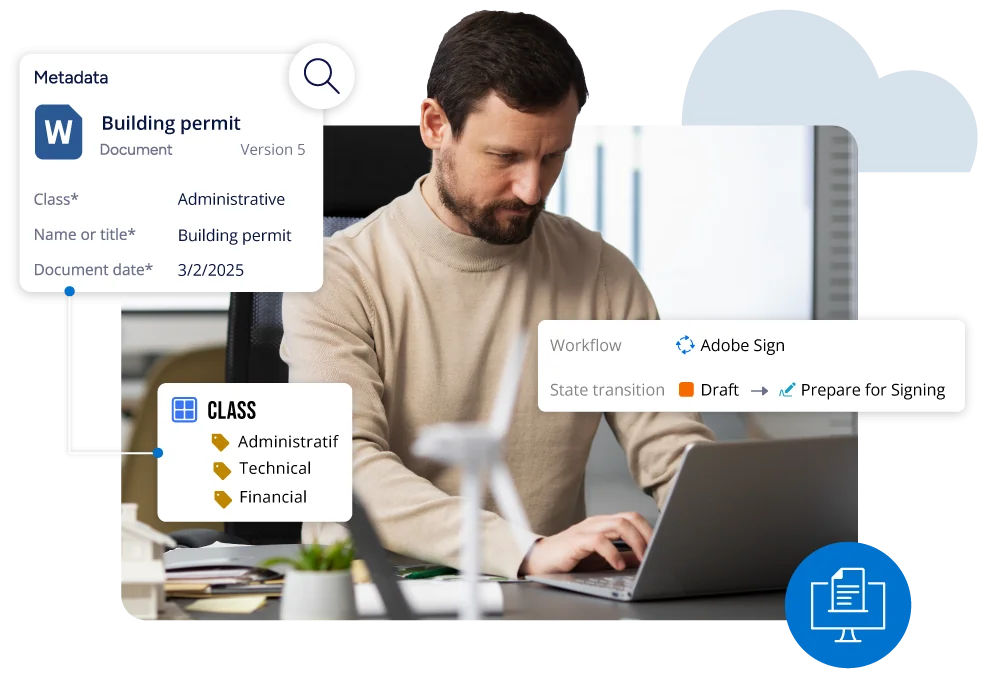
This guide introduces ECM, explains how it compares to related systems, and shows the measurable benefits organizations achieve when they manage information properly. It also covers how to select an enterprise content management system, the steps involved in ECM implementation, and the role of ECM in addressing compliance, governance, and modern work demands. Finally, we’ll look ahead at new directions for ECM, including cloud technology, AI, and mobile access, as volumes of digital content continue to grow.
Explore the Guide
ECM Basics: An Introduction to Enterprise Content Management

Enterprise Content Management (ECM) refers to the strategies, processes, and tools organizations use to capture, manage, store, preserve, and deliver business content throughout its lifecycle. Instead of being a single application, an ECM System is a collection of integrated capabilities that work together. These typically include document management, records management, document capture, workflow automation, and a secure repository for storing documents.
The demand for ECM arises from the realities of modern work. McKinsey has found that employees spend an average of 1.8 hours per day (≈ 9.3 hours per week) just searching for and gathering information — nearly a quarter of their working day (Cottrill Research). AIIM reports that organizations now use an average of 4.95 content systems, up from 3.14 about ten years ago (AIIM). This level of fragmentation creates silos that waste time, increase duplication, and make compliance more difficult. Without a unified approach, information is often misplaced, misfiled, or left inaccessible to the people who need it.
Key ECM components include:
- Document Management: Versioning, indexing, and retrieval of everyday business files.
- Records Management: Enforcing retention schedules and providing reliable audit trails.
- Capture: Scanning paper documents and converting them into searchable electronic formats.
- Workflow: Automating business processes with electronic forms and electronic signatures.
- Repository: A secure repository for centralized content storage, often driven by metadata instead of complex folder structures.
- Security: Permissions, encryption, and monitoring to safeguard against data breaches.
An effective ECM platform is designed to manage unstructured information, which includes Word documents, PDFs, emails, spreadsheets, presentations, and images. These types of content make up most knowledge assets inside most organizations. By providing instant access to accurate and current versions of documents, ECM reduces wasted effort and increases confidence in decision-making. It also creates a foundation for broader goals, such as digital transformation and improved collaboration.
At its core, ECM ensures that information is not only preserved but also useful. A well-implemented ECM strategy enables teams to spend less time searching and more time applying information to support customers, complete transactions, and meet compliance requirements. The result is a work environment where information supports progress rather than creating barriers.
ECM vs Other Systems: Document Management, CMS, DAM, and More
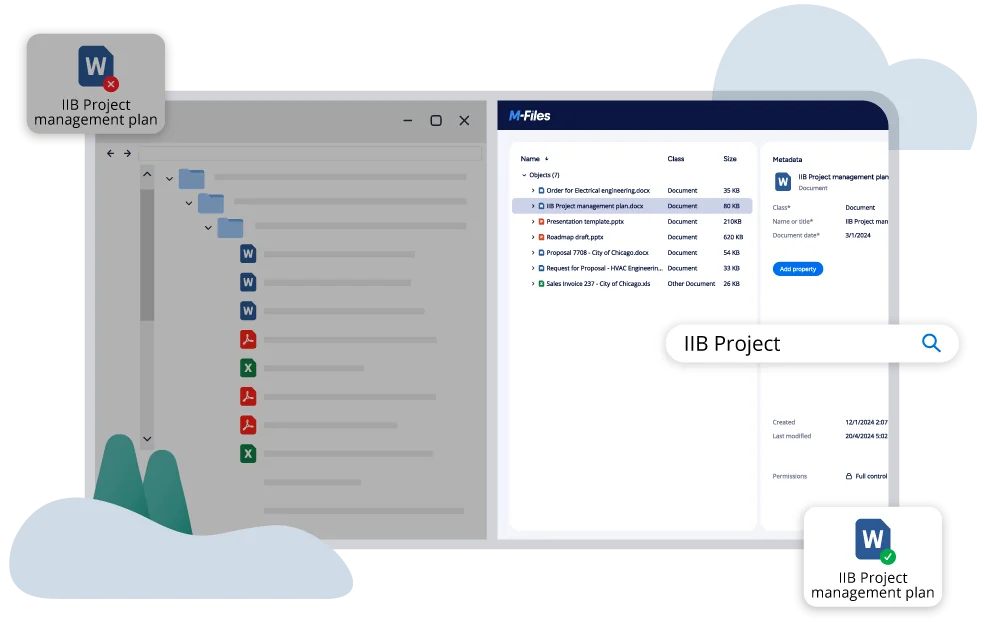
Enterprise content management is often confused with related systems, but each serves a different role. Understanding these distinctions helps organizations choose the right combination of tools and see how ECM fits into the bigger picture.
Document Management Systems (DMS): A DMS focuses on storing and managing everyday documents such as contracts, policies, and reports. It provides version control, indexing, and search features so employees can collaborate without creating duplicate files. An ECM solution includes DMS functions but goes further by adding compliance controls, retention schedules, and the ability to connect documents to broader business processes. In other words, DMS helps organize files, while ECM governs their entire content lifecycle.
Content Management Systems (CMS): A CMS such as WordPress or Drupal manages digital publishing, usually for websites and intranets. It handles templates, page design, and publishing workflows. A CMS is outward-facing, whereas ECM is inward-facing, focused on internal business content like invoices, HR files, and contracts. Both systems can coexist: a CMS manages customer-facing content, while ECM governs the internal documents behind those services.
Digital Asset Management (DAM): A DAM system manages rich media like photos, videos, graphics, and brand collateral. These assets have unique metadata such as usage rights or campaign details. DAM is often used by marketing or creative teams, but it becomes even more valuable when integrated with ECM. Together, they ensure assets are not only stored but also linked to contracts, approvals, and version histories.
Enterprise File Sync and Share (EFSS): Tools such as OneDrive, Google Drive, or Dropbox are designed for quick sharing and collaboration. They are easy to adopt but typically lack the governance features organizations need. Without retention rules, audit trails, or records management, EFSS platforms can lead to content sprawl and compliance gaps. ECM provides the structure and security that EFSS tools alone cannot.
How ECM Brings It Together
Think of ECM as the umbrella that unifies or integrates these systems. Many companies rely on a mix: a CMS for web publishing, a DAM for creative assets, and a DMS for records. ECM ties them together with consistent policies, advanced search capabilities, and centralized governance, making the distinctions between ECM and other systems clear. This ensures that information is accessible, secure, and managed according to organizational standards.
The demand for mobile access makes this integration even more important. A 2021 AIIM survey reported that 81% of employees need mobile access to business documents. While EFSS tools can provide convenience, they rarely meet compliance needs. ECM platforms provide the same accessibility while also maintaining security, retention, and audit controls. Additionally, AIIM has found that 52% of organizations have three or more content/records/document management systems in use (AIIM), highlighting the growing challenge of content sprawl.
Ultimately, ECM does not replace all other systems. Instead, it creates a common framework that ensures documents, media, and web content are governed consistently and remain usable over time.
See: ECM vs DMS, CMS, and DAM — Understanding the Differences
Why Your Business Needs ECM: Benefits, ROI, and Use Cases

Efficiency and Productivity
When employees spend 25–30% of their day searching for files, productivity inevitably suffers. ECM consolidates content in a single enterprise content management system, indexed with metadata and full-text search. Instead of digging through multiple folders or emailing colleagues for copies, users can locate information in seconds. Studies indicate ECM can cut search time by as much as 90%, which frees employees to focus on higher-value work such as analysis, customer service, or decision-making, illustrating the broader benefits and ROI of ECM. This improvement not only benefits individuals but also raises organizational throughput across projects and departments.
Cost Reduction
Paper-driven processes drain resources. AIIM estimates U.S. businesses waste $8 billion annually on printing, copying, and storing paper documents. On top of that, roughly 7.5% of paper files are lost and another 3–5% are misfiled, leading to hours of rework or the need to recreate documents. ECM digitizes archives, replaces manual processes with workflows, and reduces off-site storage fees. Some hospitals and insurers report six-figure annual savings simply by eliminating paper storage and retrieval costs. Over time, those savings compound, making ECM a practical tool for organizations seeking to reduce costs.
Risk Management
The cost of data loss continues to climb. IBM’s 2022 research found the average cost of a breach was $4.35 million, with each compromised record costing $164. About 40% of breaches still involve mishandled paper, which is both preventable and unnecessary. ECM mitigates this by storing files in a secure repository, enforcing records management, and restricting access based on roles. Automated retention ensures records are deleted when they should be, reducing liability. By embedding compliance into everyday workflows, ECM helps organizations reduce risk while protecting sensitive information.
Customer Service
Strong customer relationships depend on speed and accuracy. ECM improves customer satisfaction by giving employees immediate access to all relevant records. A support agent can pull up contracts, prior communications, and troubleshooting guides in seconds, allowing them to resolve issues on the first call. Insurance providers that deployed ECM reported claim turnaround times cut nearly in half, directly boosting client trust. In industries like banking or healthcare, where clients expect quick and precise answers, ECM ensures employees can deliver consistent service.
ROI
The financial case for ECM is strong. Forrester has reported ECM deployments delivering nearly 300% ROI within three years, while IDC measured a 404% ROI over five years from modern document management solutions. Gains come from reduced labor costs, shorter cycle times, fewer compliance failures, and lower storage overhead. These returns make ECM one of the most financially defensible investments in digital transformation.
Departmental and Industry Use Cases
- Accounts Payable: Automates invoice intake, approval routing, and electronic signatures, reducing cycle times from weeks to days.
- Human Resources: Centralizes employee files, uses electronic forms for onboarding, and applies retention schedules for compliance.
- Legal: Provides contract versioning, clause libraries, and audit trails to support discovery.
- Marketing: Uses digital asset management integrated with ECM to maintain brand consistency and track asset usage rights.
- Healthcare: Stores patient records in electronic files with strict access control, ensuring compliance with HIPAA and reducing paper risk.
- Financial Services: Maintains audit-ready documentation, aligns with SOX or GDPR requirements, and secures customer data.
ECM delivers value across the organization. From saving time and cutting costs to improving customer service and demonstrating compliance, it creates benefits that resonate at every level of the business.
Learn: The Benefits and ROI of Enterprise Content Management
Ensuring Compliance and Governance with ECM
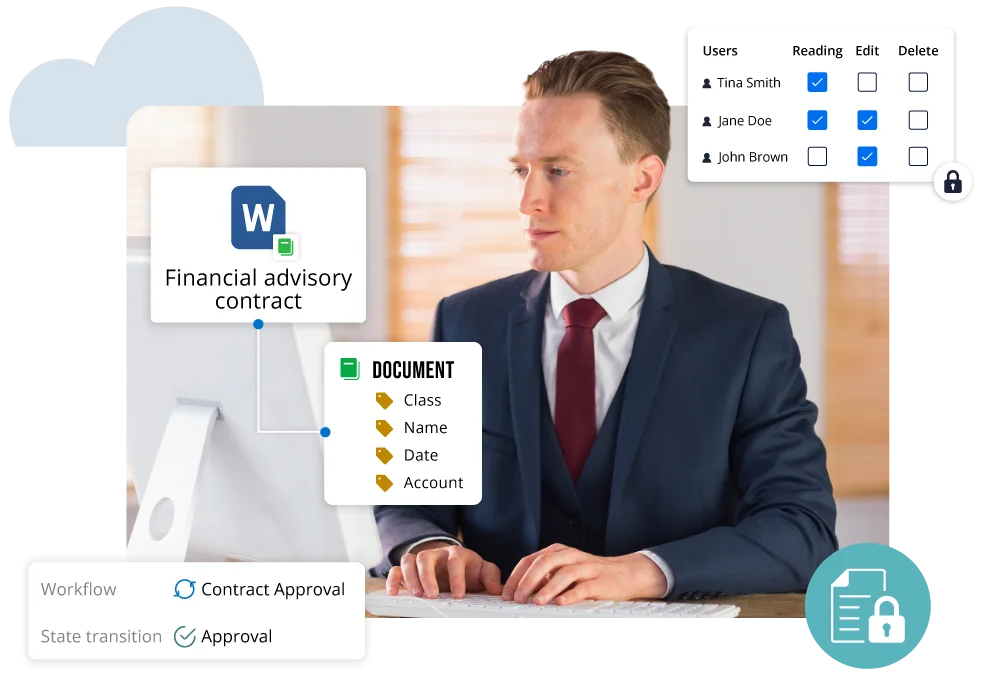
Compliance is a constant requirement in finance, healthcare, government, and many other industries. Regulations such as HIPAA, GDPR, and SOX set strict rules for how organizations must manage and protect information. Enterprise Content Management makes governance routine by embedding these requirements directly into daily work rather than treating them as separate, manual steps.
How ECM supports compliance:
- Access Controls: Only authorized users can view or edit sensitive files. Permissions are role-based and audit logs track every action for accountability.
- Retention Policies: Automate how long records are kept and when they must be securely disposed. This ensures documents are neither deleted prematurely nor kept past legal requirements.
- Legal Holds: Allow administrators to freeze content so it cannot be altered or deleted during audits, investigations, or litigation.
- Integrity Tools: Electronic signatures and version histories provide defensible proof of authenticity, supporting both internal governance and external audits.
The risks of weak governance are significant. IBM reports average breach costs approaching $5 million worldwide, and healthcare fines per HIPAA violation can reach $68,000. The Ponemon Institute found that nearly 40% of breaches still involve paper documents, which can be lost, stolen, or mishandled. AIIM further reports that only 26% of document, content, and records management systems integrate with core business applications — leaving 74% disconnected (AIIM), which increases compliance gaps and inefficiencies. Without consistent digital governance, organizations face legal exposure, reputational damage, and lost business.
ECM enforces retention and security consistently, reducing compliance failures and supporting smoother audits while strengthening compliance and governance with ECM. By embedding records management into the content lifecycle, ECM ensures information is managed in line with industry regulations while also lowering exposure to penalties. This automated approach saves staff from having to remember complex policies and reduces the risk of human error.
Practical examples highlight the value. In healthcare, ECM secures patient records in electronic files accessible only to authorized clinicians, with logs that demonstrate HIPAA compliance. In finance, retention rules ensure tax documents and audit reports are kept for the required number of years and then disposed of properly. In government agencies, ECM supports freedom-of-information requests by ensuring public records are captured, indexed, and retrievable without delay.
Governance also brings operational benefits. A clean, policy-driven content environment prevents “save everything forever” scenarios that create digital clutter. By disposing of records on schedule, organizations control storage growth and maintain clarity about which documents are current and valid. ECM thus strengthens compliance while also improving efficiency, creating a more secure and trustworthy information environment.
Choosing the Right ECM Solution

Enterprise content management solutions vary widely, so evaluating features, deployment, and cost is critical. A good choice depends not only on what the system can do but also on how easily it fits into existing operations.
Core features to expect:
- Advanced search capabilities for quick, precise retrieval.
- Workflow automation with approvals and electronic signatures.
- Records management with retention controls and reporting.
- Integration with Microsoft 365, CRM, ERP, and other line-of-business systems.
- Secure, role-based access and detailed audit trails.
Deployment options:
- Cloud: Flexible, vendor-managed, and now the most common model.
- On-Premises: Still used in regulated industries requiring strict local control.
- Hybrid: Combines cloud scalability with on-premises security.
Flexera’s 2024 State of the Cloud Report found that 89% of organizations use a multi-cloud strategy and 80% run hybrid cloud deployments, making flexibility a critical factor when choosing an ECM platform (Flexera 2024).
Cost considerations:
Look beyond licenses. Budget for migration, metadata setup, user training, and ongoing administration. A commissioned Forrester Total Economic Impact™ (TEI) study of M-Files found a 294% ROI over three years, largely from retiring legacy systems, improving compliance, and streamlining workflows (M-Files / Forrester TEI Study).
Other evaluation factors:
Consider usability, since adoption often hinges on interface design. Test everyday scenarios such as saving an email into a project folder, routing an invoice for approval, or retrieving a five-year-old contract. Pay attention to vendor support, update cycles, and scalability. Some solutions excel for small teams but struggle at enterprise scale. A thorough pilot or proof-of-concept helps reveal these differences before committing.
Selecting an ECM solution is less about checking boxes and more about finding the system that fits your organization’s processes, security requirements, and growth plans.
Read: How to Choose the Right Enterprise Content Management Platform
Implementing ECM Successfully

Rolling out Enterprise Content Management (ECM) requires as much focus on people and process as on technology. Research consistently shows that around 70% of digital transformation projects fail to achieve their goals, most often due to poor adoption and change management (McKinsey). Adoption remains a major concern in ECM too: AIIM’s 2023 State of Intelligent Information Management report highlights cultural resistance, lack of executive focus, and funding challenges as the top barriers to successful adoption of content systems (OpenText summary of AIIM 2023).
Steps to success
- Define Goals: Link the ECM implementation to measurable outcomes such as faster invoice cycles, reduced off-site storage, or higher customer satisfaction scores. Clear goals provide benchmarks for ROI and help demonstrate progress to leadership.
- Engage Key Stakeholders: Involve HR, Finance, Legal, IT, and compliance from the beginning. These groups shape metadata, workflows, and retention rules. Stakeholder involvement also builds ownership and reduces resistance when the system goes live.
- Pilot First: Start with a single department or a specific process that has clear pain points. Accounts Payable, for example, often makes a strong pilot since electronic forms and electronic signatures immediately shorten invoice cycles. Publish results to show value and create internal advocates.
- Metadata and Permissions: Keep required metadata fields minimal and automate where possible. Role-based permissions simplify access management and reduce mistakes. Clean design here ensures that saving and retrieving files feels easier, not harder, than old habits.
- Training: Provide role-specific training. HR should see how to manage employee files securely, while Legal should learn how to apply records management and holds. Show how advanced search capabilities deliver instant access to information, so employees immediately see the personal benefit.
- Change Management: Communicate about why ECM matters and what problems it solves. Use champions in each department to encourage adoption and answer questions. Regular communication helps avoid the perception that ECM is just another IT project.
Measuring results
Measurement should start as soon as pilots go live. Useful metrics include cycle times, search success rates, and audit readiness. Track how long it takes to approve an invoice, how quickly legal teams respond to discovery requests, or how often employees succeed in finding what they need on the first try. Share these results widely: “Invoice approval time dropped from 10 days to 3,” or “Legal fulfilled discovery requests in hours instead of weeks.” These success stories demonstrate the value of ECM and reinforce adoption.
Common pitfalls and how to avoid them
- Migrating everything at once without cleanup can overwhelm users. Focus first on current and active documents, then phase in archives.
- Overcomplicated taxonomies discourage adoption. Start simple and evolve as needs grow.
- Failing to integrate ECM with tools employees already use leads to shadow systems. Connect ECM to Outlook, Teams, or CRM so information access is part of normal workflows.
When implementation is handled as a change in how people work, not just a new system to install, ECM becomes an enabler rather than a burden, reflecting the principles of implementing ECM successfully. The result is lasting adoption, measurable ROI, and a foundation for stronger compliance and efficiency.
See: How to Implement Enterprise Content Management Effectively

The concept of enterprise content management continues to evolve. Analysts increasingly use the term Content Services Platforms to describe modular, API-driven systems that connect multiple repositories and deliver content in the flow of work. Rather than relying on one massive database, organizations are shifting to federated approaches that unify search, governance, and workflows across existing systems.
AI and Intelligent Information Management
Artificial intelligence is becoming integral to ECM. Machine learning can classify documents, suggest metadata, detect sensitive data, and summarize long research reports. Natural language processing improves search accuracy by understanding intent rather than simple keywords. Together, these capabilities reduce manual effort and strengthen compliance, creating what AIIM calls intelligent information management.
Cloud and Mobile
Cloud adoption is accelerating. Cloud-based ECM reduces infrastructure costs, scales on demand, and provides immediate access from any device. Mobile-first interfaces are now expected, giving executives and field teams the same secure information access as office staff. Hybrid deployments are also common, balancing cloud scalability with on-premises control for regulated content.
Data Growth
IDC projects the global datasphere will exceed 181 zettabytes by 2025, up from about 149 zettabytes in 2024 (Rivery). Every day, enterprises are generating about 402.74 million terabytes of new data (Exploding Topics). Furthermore, 80–90% of newly generated enterprise data is unstructured, and it is growing about three times faster than structured data (Files.com). Managing that volume of unstructured information is impossible without structured governance. ECM ensures data is captured, classified, and retained properly so it becomes an asset rather than uncontrolled clutter.
Market Growth and Industry Impact
Analysts forecast strong market expansion, underscoring the importance of preparing for the future of ECM and emerging trends. The ECM market was valued at USD 42.93 billion in 2024 and is projected to grow to USD 150.97 billion by 2032 (CAGR ~17.2%) (Fortune Business Insights). Grand View Research reports similar trends, with the ECM market at USD 39.46 billion in 2023, forecasted to reach USD 102.01 billion by 2030 (CAGR ~15.1%) (Grand View Research). Growth is fueled by regulatory pressure, digital transformation, and the shift to hybrid work. As industries adapt, ECM’s role as the backbone of governance, productivity, and risk reduction will continue to expand.
Enterprise Content Management is Essential for Long-Term Success
Enterprise content management provides organizations with a consistent framework for capturing, organizing, securing, and using information. From document capture and electronic signatures to records management and compliance with industry regulations, ECM ensures that content supports the business rather than slowing it down.
The benefits are tangible: faster information access, lower operating costs, reduced compliance risk, and improved customer satisfaction. By starting with a clear ECM strategy, involving key stakeholders, and rolling out thoughtfully, companies can unlock the full value of their content and position themselves for long-term success.
In a world of ever-expanding digital content, ECM is not optional — it is the system that keeps information secure, accessible, and useful throughout its entire content lifecycle.
Learn: ECM Trends: AI, Cloud, and Content Services
Enterprise Content Management (ECM) FAQs
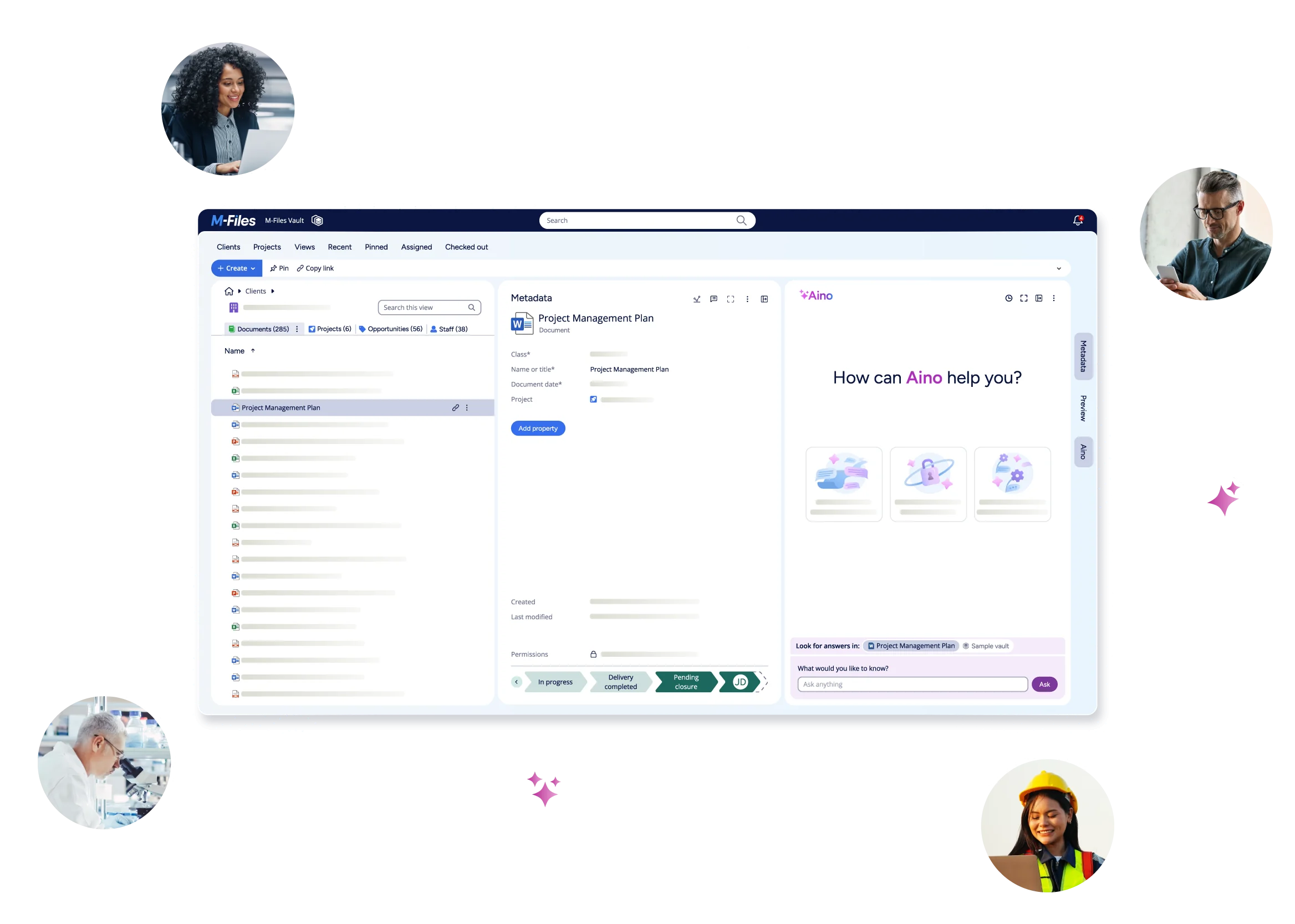
See M-Files in Action